
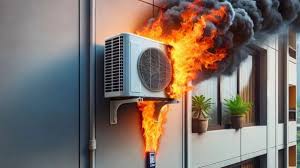
New Delhi: A massive fire broke out in a four-story residential building in Vivek Vihar, Delhi, around 3:47 a.m. on Sunday. Preliminary investigations revealed that the cause of the fire was an AC blast. Nine people have died so far, and seven to eight others have suffered serious burns.
Fourteen fire tenders arrived at the scene, and 10-15 people were rescued. The death toll could rise further. This incident reminds us how dangerous household ACs can be if they are not properly maintained.
Let’s explore why and how ACs explode.
Main Causes of AC Blasts
Gas Leakage: ACs contain refrigerant gas (such as R-410A or R-32). If there is a leak in the pipeline and the gas escapes and comes into contact with a small spark, an explosion can occur.
Compressor Failure: The compressor is the heart of an AC. Old or faulty compressors can cause overheating. Excessive heat increases gas pressure and can lead to a blast.
Poor maintenance: Many people don’t have their ACs serviced for years. Dust, dirty filters, and blocked pipes cause overloading. This problem is exacerbated by continuous use during the summer.
Electrical problems: Voltage fluctuations or faulty wiring can cause a short circuit, igniting the gas.
Poor installation: Installing the AC in the wrong place or improper plumbing connections also pose a significant risk.
How to prevent an AC blast?
Get your AC professionally serviced every six months.
Always use a reputable AC and stabilizer.
Do not place the AC in direct sunlight or in a confined space.
If you suspect a gas leak, immediately shut it down and call a technician.
Consider replacing old ACs (more than 10 years old).
This incident in Vivek Vihar is a reminder of how even small negligence can lead to a major accident. AC is a means of comfort, but without proper care, it can also be fatal.
If you have an AC in your home, have it checked today. With regular maintenance and careful attention, we can not only save our lives but also keep our entire family safe.